How to Pitch Your Liquor Store to Local Media: A PR Playbook for Getting Free Press Without Hiring an Agency
By Intentionally Creative, Editorial Team14 min read
Listen to this article17:22
Schedule a free strategy call and Intentionally Creative will build a custom plan for you.
Schedule Your Free Strategy CallFree audit. No commitment.
Get a Free Audit. No commitment.
Learn liquor store PR and local media pitching strategies to earn free press coverage without hiring an agency. A step-by-step DIY PR playbook for retail.
You've tried the ads. You've posted on Instagram. You've set out the cheese cubes and poured samples on a Saturday afternoon. And yet, the one marketing channel that could put your store in front of thousands of local customers overnight, for free, is the one you've probably never touched.
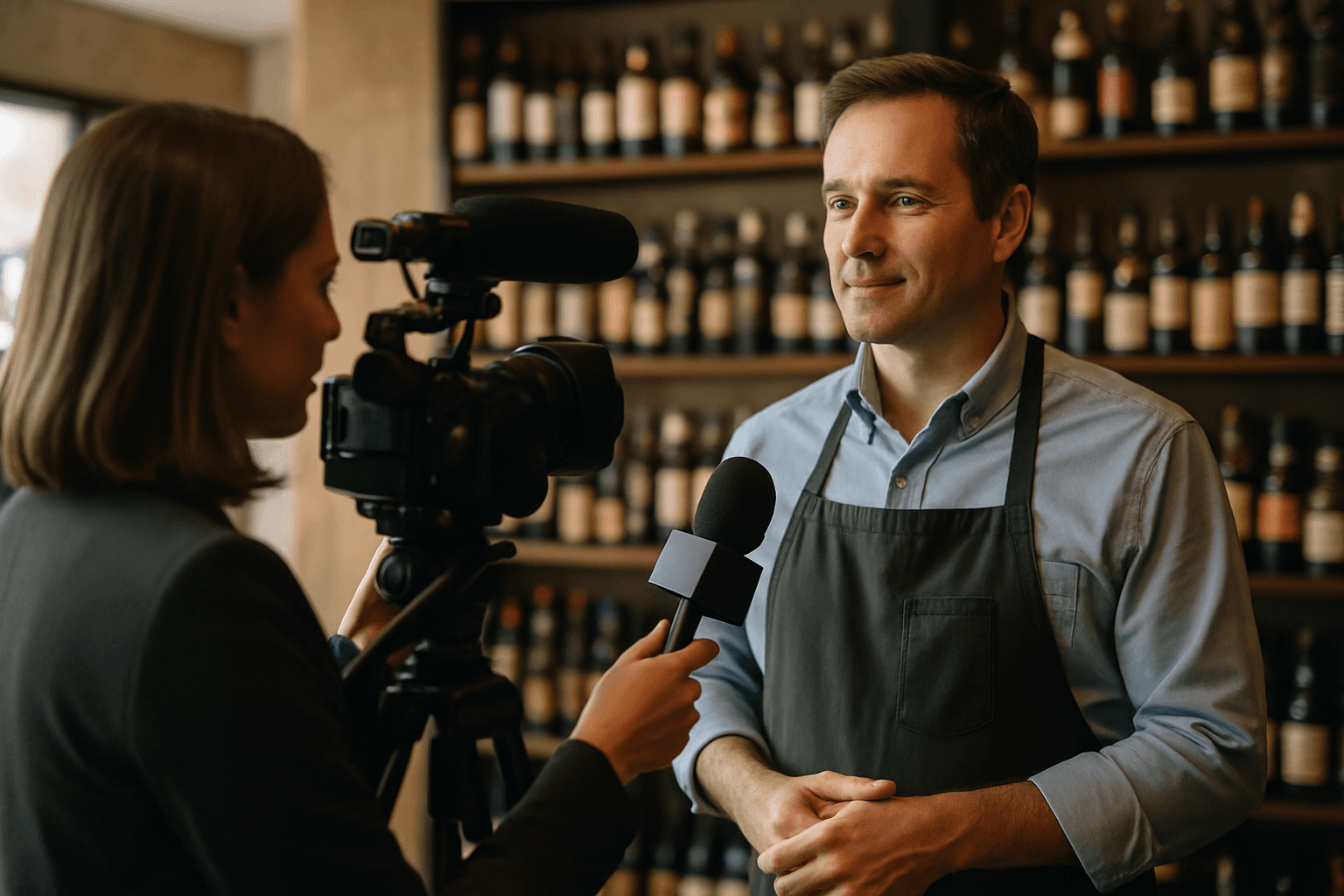
Liquor store PR and local media outreach is, hands down, the most underleveraged growth tool in independent retail. We're not talking about hiring a $5,000-a-month agency or writing press releases in corporate-speak. We're talking about sending the right email to the right reporter at the right time, and watching your store show up on the morning news, in the weekend paper, or on the local food blog your best customers already read.
The best part? Almost nobody in your market is doing this. We audited every major liquor store marketing guide ranking online and found a glaring hole: not one of them teaches you how to pitch media. That gap is your opportunity. This playbook closes it, step by step, template included, zero PR experience required.
You already know the usual playbook. Run social media ads. Start a loyalty program. Host tastings on Saturday afternoons. Every liquor store marketing guide online repeats the same advice.
But here's what none of them mention: how to get your store featured in the local news.
We audited the top-ranking liquor store marketing guides and found a complete content gap when it comes to PR and media pitching strategies. Not one teaches you how to write a pitch email, identify the right reporter, or turn a store event into a news segment.
Discover how liquor stores can host charity wine events to boost brand loyalty, drive foot traffic, and engage their ...
That's wild when you consider the upside. Remember the raccoon that broke into a liquor store? That story was picked up by WWBT, Gray News, and multiple national outlets within days. A quirky moment at a local shop turned into viral coverage, the kind of exposure no ad budget could buy.
Earned media, a news story, a feature in the local paper, a segment on morning TV, carries something paid ads never will: third-party credibility. Consumers read it as an endorsement, not a sales pitch.
For time-strapped liquor store owners, a single local media hit can drive more foot traffic than weeks of social posts. And it costs nothing but a well-crafted email.
This blog is your DIY PR playbook. No agency retainer required. No PR experience assumed. Just proven local media outreach tactics built specifically for liquor retail, so you can stop paying for attention and start earning it.
Now that you understand why this matters, let's talk about who you're pitching, and why they actually want to hear from you.
Discover 7 proven Instagram content ideas for liquor stores that boost engagement and drive sales. Learn how to promo...
Here's something most liquor store owners don't realize: local journalists are desperate to hear from you.
Not the other way around.
Lifestyle, food/drink, and business reporters at your local paper or TV station face relentless pressure to produce fresh, hyperlocal content, often multiple stories per week. They're scouring their communities for angles that feel timely, relevant, and real. Your pitch isn't an imposition. It's a solution to a problem they have every single Monday morning.
And since your competitors almost certainly aren't pitching reporters, the opportunity is sitting wide open.
1. Community events and tastings. Hosting a bourbon tasting or wine pairing night? That's a lifestyle segment waiting to happen. These events already rank among the top liquor store marketing tactics, now double their value by pitching them to a reporter. Pro tip: liquor brand reps routinely offer promotional support, samples, and swag. Leverage those resources to build newsworthy experiences at little to no cost.
10 wine club marketing tactics that reduce the 40% year-one cancellation rate and boost member spending at your liquo...
2. Newsjacking trending topics. When tariffs, inflation, or alcohol regulations dominate headlines, you become the local expert. [VERIFY] One Colorado liquor store reduced prices amid tariff fears in early 2026 and earned media coverage by connecting its business decision to a national economic story. That's local media outreach working beautifully.
3. Quirky, human-interest moments. In late 2025, a raccoon broke into a liquor store. The story was picked up by WWBT, Gray News, and multiple national outlets within days. You don't need a raccoon, but you do need to recognize when something fun, weird, or heartwarming happens in your shop and actually share it. Free press often starts with a single strange Tuesday.
4. Local partnerships and community impact. Charity bottle drives, collaborations with neighborhood restaurants, sponsoring a local festival, these stories practically write themselves for community-beat reporters hunting for feel-good content.
5. Expert commentary. You know more about spirits trends, holiday buying patterns, and local drinking culture than almost anyone in your market. When a reporter needs a quote about rosé season or bourbon shortages, be the person they call. Position yourself as a source before you need the coverage.
The bottom line? You're already generating stories. You just haven't been telling them to the right people yet.
So you've got story angles. Now you need to know exactly who to tell them to, and how to find those people fast.
Most of your competitors have never built a media list. That's your advantage, and it starts with a simple spreadsheet.
Start with the obvious: your local TV stations, newspapers, alt-weeklies, and regional lifestyle magazines. You're looking for reporters who cover food and drink, local business, lifestyle, or community beats. Check their recent articles, most bylines include an email address or social media handle right there.
But don't stop at traditional media. Local bloggers, podcast hosts, and hyperlocal newsletters are goldmines for coverage. Think Nextdoor influencers, neighborhood Facebook group admins, even that one person who runs the "Best of [Your [City]" Instagram account.](/blog/7-tiktok-marketing-strategies-for-liquor-stores-that-actually-drive-foot-traffic) These micro-media outlets often have more engaged local audiences than the big stations, and they're usually easier to reach.
Create a simple spreadsheet with five columns: reporter name, outlet, beat, email, and notes about recent stories they've covered. That's it. This takes 30–60 minutes and becomes your most valuable media outreach asset, something you'll use over and over.
One more step that separates amateurs from pros: follow these contacts on social media before you pitch. Like their posts. Share their stories. Comment something genuine. When you eventually send that email, you won't be a cold stranger, you'll be someone they recognize.
Thirty minutes of research. Thirty minutes of organizing. One hour total, and you've built the foundation of a marketing channel most store owners don't even know exists.
You're probably sitting on a goldmine of PR resources and don't even realize it. You don't need a budget for liquor store PR and local media outreach. You need to get resourceful with what's already in your orbit.
Reddit users and industry insiders consistently point out something most store owners overlook, your brand reps want to help you create buzz. They can offer event sponsorships, exclusive product access, and even celebrity or brand ambassador appearances.
Before your next tasting, have a real conversation with your reps. Ask the questions that turn a routine Saturday sampling into a story:
These additions are the difference between a forgettable event and genuine earned coverage.
Every event deserves a media pitch, sent 7–10 days in advance, with a follow-up the day before. Attach a photo from a previous event. Make it stupidly easy for a reporter to say yes.
And if nobody shows? Document everything yourself. Take sharp photos. Grab 30-second video clips. Post-event recaps make excellent "in case you missed it" pitches, and they serve as proof of concept for your next round of outreach.
Here's a truth nobody in liquor store marketing wants to think about: your store can end up in the news whether you pitch it or not. And when that happens on someone else's terms, the results can be devastating.
[VERIFY] A North Dakota liquor store made headlines for refusing to accept tribal IDs. The story spread fast, discrimination complaints, social media outrage, lasting brand damage. The store had virtually no positive media presence to counterbalance the narrative. No feature stories. No community partnerships on the record. Just a Yelp page and a firestorm.
When a reporter Googles your store during a controversy, what do they find? If the answer is nothing, you've got zero goodwill to fall back on. Proactive media outreach changes that equation entirely.
Consistent local media outreach, even just 3–4 pitches per year tied to seasonal trends, tasting events, or community partnerships, builds a reservoir of goodwill that functions like reputation insurance. It costs you nothing but time, and it pays dividends no amount of advertising can buy.
Think of DIY press outreach as playing offense so you never have to play defense from scratch.
You've got the strategy, the angles, the template, and the mindset. Now let's turn all of it into a concrete plan you can execute starting this week.
Templates and theory are great. A calendar is better. Here's how to put everything into motion.
You've got your list. You know who to contact. Now comes the part that trips most people up: what do you actually say?
Most liquor store owners have never sent a reporter a proper pitch email. That means your bar is low. Let's clear it.
The subject line is everything. Reporters scan inboxes the way you scan distributor invoices, fast and ruthlessly. Keep it short, specific, and local. Two examples that work:
See the pattern? Each one tells the reporter exactly what the story is and why their audience would care. No cleverness. No mystery. Just clarity.
Now, the body of your pitch email: keep it under 150 words. Reporters get hundreds of emails daily. Lead with the story, not with yourself. Answer three questions: Why should their audience care? Why now? Why is this interesting?
Include one or two concrete details, a date, a surprising number, a visual element, that help the reporter immediately picture the segment or article. Something like: "We're expecting 80+ attendees and partnering with three local distilleries for live tastings" gives them something to work with.
And here's a tip that dramatically increases your chances of coverage, especially with TV and online outlets: always attach or offer a high-quality photo. Visual assets turn a "maybe" into a "yes" faster than anything else in media outreach.
Steal this. Seriously.
Subject: [Specific Event/Angle] at [Store Name] in [City], This [Day/Date] Hi [Reporter First Name], Hook: [Store Name] is [doing something specific and interesting] this [date/timeframe]. [One sentence on why this matters to their local audience.] Detail: [Concrete detail, attendance expected, surprising stat, or trend context.] [One sentence adding color, a visual element, a partner involved, or a quote-worthy angle.] Offer: I'm happy to set up a quick interview, provide high-res photos, or host your crew at the store anytime this week. What works for your schedule? [Your Name] [Store Name & Title] [Phone | Email]
That's it. No three-paragraph backstory about your store's founding. No attachments with a full press kit (unless asked). Brevity and clarity win every time.
One more thing worth knowing: your brand reps can often supply event materials, branded giveaways, and even guest speakers, often at no cost. Use those resources to build in-store experiences that give reporters a reason to show up. Great coverage doesn't require a big budget. It requires a good story, told briefly, sent to the right person.
Speaking of those brand reps, let's talk about how to turn the resources already in your back pocket into serious PR fuel.
Intentionally Creative specializes in digital marketing strategies that drive real results. Let us show you what's possible.
Schedule a CallThere's one more reason to start building your media presence now, and it has nothing to do with driving sales. It has to do with protecting your business when things go sideways.
Month 1: Lay the Foundation (1 hour total) Build your local media contact list, reporters, editors, morning show producers. Identify your next two pitch-worthy moments (an upcoming tasting event, a seasonal angle, a community partnership). Then send your first pitch using the template from this playbook. Done.
Month 2: Build Momentum Follow up on that first pitch. Then send a second one, try newsjacking a trending topic or offering expert commentary on something timely like summer cocktail trends, holiday gifting guides, or New Year's entertaining. Start engaging with local reporters on social media. A thoughtful comment today becomes a returned email tomorrow.
Month 3: Evaluate and Plan Did you get a response? Coverage? Even a "not right now, but keep me posted" is a win, you're on their radar now. Plan your next quarter of pitches around upcoming events, brand rep collaborations, and local news hooks.
Skip the fancy PR dashboard. Track what actually matters: media mentions, website traffic spikes after coverage, and in-store customers who say "I saw you on the news." That's your ROI.
By following this playbook, your liquor store PR and local media strategy is already miles ahead of every competitor in your market. Earning press isn't a myth, it's a skill. And now you have the playbook.
Every section of this playbook was built around one simple idea: you don't need a PR agency, a marketing degree, or a big budget to get your liquor store in the local news. You need a story worth telling, a reporter worth telling it to, and a short email that connects the two.
The opportunity in front of you right now is genuinely rare. Your competitors aren't pitching. Reporters are hungry for exactly the kind of hyperlocal, community-driven content you're already creating. And the tools, your brand rep relationships, your events, your expertise, are already in your hands.
So here's your move: block one hour this week. Build your media list. Pick your first angle. Send the pitch. That single email could be the one that puts your store on the morning news, drives a wave of new customers through your door, and changes how your community sees your business.
Stop paying for attention. Start earning it.