Geofencing Your Competitors: A Step-by-Step Guide to Targeting Shoppers Near Other Liquor Stores
By Intentionally Creative, Editorial Team11 min read
Listen to this article15:11
Schedule a free strategy call and Intentionally Creative will build a custom plan for you.
Schedule Your Free Strategy CallFree audit. No commitment.
Get a Free Audit. No commitment.
Learn how to use geofencing competitors to intercept nearby shoppers. A step-by-step guide to location-based advertising for liquor stores.
Every day, potential customers drive right past your liquor store to visit a competitor down the road. They're already in buying mode, wallet out, taste in mind, and you're missing them by inches. Traditional advertising can't reach someone at that precise moment of decision. But what if you could?
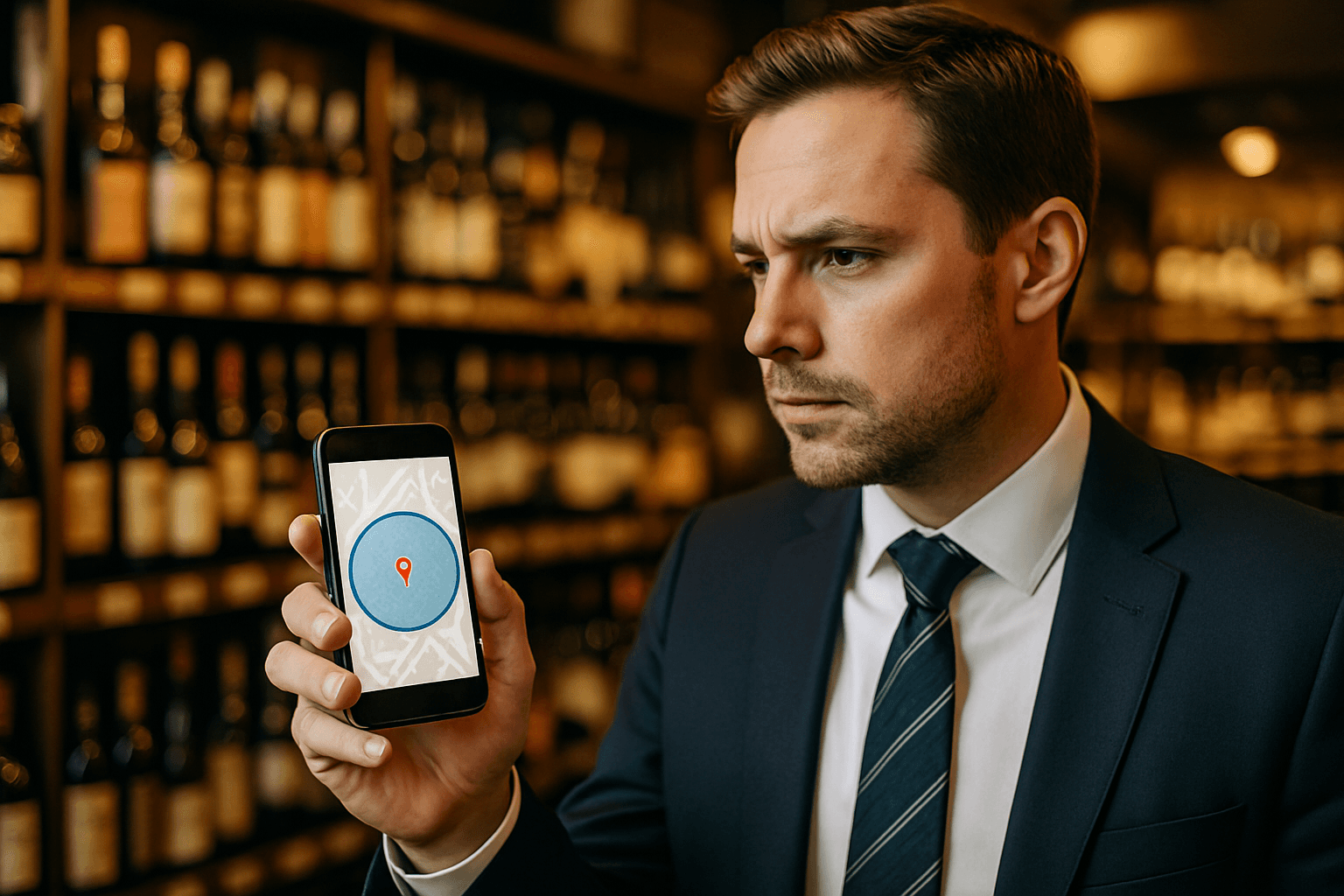
That's exactly what geofencing competitors makes possible. This location-based advertising technique lets you draw a virtual boundary around rival liquor stores and serve targeted mobile ads to shoppers the moment they step inside. Instead of hoping nearby shoppers discover you, you're intercepting them exactly when they're already shopping. It's a smarter way to compete, especially when you're an independent retailer up against chains with bigger ad budgets.
In this guide, we'll walk through everything you need to know about competitor geofencing for liquor stores, from how the technology works to choosing the right provider and measuring your return on investment.
Geofencing is a location-based advertising technique that lets you draw a virtual boundary around a physical location and trigger targeted mobile ads when someone enters that space. According to How Geo-Targeted Offers Drive Foot Traffic to Liquor Stores ↗, "geofencing technology allows you to draw a virtual boundary around your store, or your competitor's, and trigger ads when a person's device crosses that line."
Avoid these common geofencing mistakes liquor stores make. Learn how to use geofencing as a liquor store to drive foo...
This technology isn't just for liquor stores. According to the Geo-Spatial Methods & Tools for Substance Abuse Literature Review ↗, geofencing has documented potential use in multiple areas including fitness centers, fast food restaurants, grocery and liquor stores.
For liquor stores, the ability to target shoppers near competitor locations is a game-changer. Geo-conquesting specifically takes a competitive edge by targeting individuals who are near or visiting a competitor's liquor store, as explained by What is Geofencing? A Liquor Store Owner's Guide to Driving Foot Traffic ↗.
With independent liquor retailers facing increasing competition from larger chains and online sellers, geofencing competitors gives you a powerful tool to capture nearby foot traffic and build your customer base.
Meta ads for liquor stores require strict compliance and smart strategy. Learn campaign structure, budget allocation,...
Most independent liquor stores use geofencing to draw customers to their own location. But there's a smarter way to put that same technology to work for your store: geo-conquesting.
Geo-conquesting specifically takes a competitive edge by targeting individuals who are near or visiting a competitor's liquor store. Instead of just drawing a boundary around your own location, you're drawing one around theirs, and reaching potential customers right in their competitor's orbit.
This creates a meaningful advantage for independent stores that can't outspend larger chains on traditional advertising. Rather than hoping nearby shoppers discover you, you reach them exactly when they're already considering where to buy. That timing matters.
Learn how to launch geofencing campaigns for liquor stores that target competitor locations and local events while ke...
Geofencing technology allows you to draw a virtual boundary around your store, or your competitor's, and trigger ads when a person's device crosses that line, according to How Geo-Targeted Offers Drive Foot Traffic to Liquor Stores ↗. The same platform you use to run your regular geofencing for liquor stores campaigns can be applied to competitor locations with minimal extra effort.
According to the Geo-Spatial Methods & Tools for Substance Abuse Literature Review ↗, geofencing has documented potential use in multiple areas including fitness centers, fast food restaurants, grocery and liquor stores, demonstrating this technology works across retail environments. For your store, this means the same location-based advertising liquor retail strategy you already understand can extend to competitor targeting advertising.
You choose which competitor locations to fence based on your local market knowledge. Then, when someone walks out of that store, or even lingers in the parking lot, your message appears on their phone. You're not interrupting their day. You're simply showing up where you know they're already shopping.
Now that you understand the strategy behind geo-conquesting, let's look at how the technology actually functions so you can set up your campaigns with confidence.
With geofencing competitors in mind, you draw a virtual boundary around rival liquor stores using GPS or Wi-Fi signals. According to How Geo-Targeted Offers Drive Foot Traffic to Liquor Stores, geofencing technology allows you to draw a virtual boundary around your store, or your competitor's, and trigger ads when a person's device crosses that line.
This practice is commonly referred to as geo-conquesting in marketing circles. As explained in What is Geofencing? A Liquor Store Owner's Guide to Driving Foot Traffic, geo-conquesting specifically takes a competitive edge by targeting individuals who are near or visiting a competitor's liquor store. The targeting operates at the device level rather than identifying specific people, which keeps privacy concerns in check while still enabling effective competitor targeting advertising.
Location-based advertising for liquor retail relies on entry and exit triggers for ad delivery. When a device crosses your defined perimeter, whether entering or leaving, the campaign activates. This dual-trigger setup captures shoppers at the moment they're making decisions, giving your store a chance to pull them away before they spend elsewhere.
According to the Geo-Spatial Methods & Tools for Substance Abuse Literature Review, geofencing has documented potential use in multiple areas including fitness centers, fast food restaurants, grocery and liquor stores, demonstrating this technology works across retail environments.
You've launched your campaign, but launching isn't enough. Here's how to optimize for maximum impact.
Timing matters when geofencing competitors. Consider serving your location-based advertising liquor retail messages during peak shopping hours, weekends and evenings when foot traffic at liquor stores increases. Aligning campaigns with major holidays and sporting events when alcohol purchases spike makes sense too. This strategic timing helps ensure your competitor targeting advertising reaches shoppers already in buying mode.
The most effective geo-conquesting campaigns combine strong incentives with exclusivity. Discounts and buy-one-get-one deals work well, but loyalty point multipliers on first purchases can build long-term customer relationships. Exclusive products or early access to limited releases create urgency that generic promotions cannot match.
Implement frequency capping to prevent ad fatigue, showing the same message multiple times daily irritates potential customers and wastes budget. Always ensure compliance with local alcohol advertising regulations, which vary by state and jurisdiction. Some areas restrict discount language or require specific disclaimers in promotional materials. Geofencing for liquor stores ↗ works best when you're reaching receptive audiences, not forcing messages on people who've already seen your offer multiple times today.
All the targeting in the world means nothing if you can't prove it's working. Here's how to measure the actual impact of your competitor geofencing campaigns.
When geofencing competitors, tracking the right metrics makes the difference between knowing your campaign works and guessing. Focus on these trackable indicators across your funnel:
Many platforms provide these metrics automatically, giving you a clear picture of engagement before, during, and after campaigns run.
Measuring foot traffic lift requires comparing baseline data against campaign periods. Pull your point-of-sale traffic data for the weeks your geofencing competitors campaign runs, then compare against the same period from a previous month or year. Some geofencing for liquor stores tools integrate directly with foot traffic counters for more precise attribution.
Location-based advertising liquor retail campaigns require allow sufficient time for the system to gather meaningful patterns before drawing conclusions about performance. Initial results may feel modest as the algorithm learns your audience, but performance often improves as the system optimizes delivery to high-intent shoppers.
Competitor targeting advertising requires patience and consistent optimization. Most campaigns show meaningful trends within a few months when properly configured and budgeted.
With the technology explained, let's get into the practical steps for building your first competitor geofencing campaign.
The foundation of any geo-conquesting strategy is mapping competitor locations in your trade area. Start by identifying liquor stores within a reasonable distance from your business, you can use business directories, local market knowledge, and mapping tools to build your target list. The key is drawing virtual boundaries around those locations so you can reach shoppers when their devices cross into that zone, as geofencing technology allows you to do. Focus on direct competitors with similar product selection and price points for the most efficient spend.
When selecting competitor locations to target, prioritize stores that share your core customer base. A specialty wine shop should focus on other wine-focused retailers, while a convenience-style liquor store may want to cast a wider net.
Radius size matters here. Many practitioners recommend starting with approximately 500 feet for tight targeting in urban areas with dense foot traffic, keeping your targeting tight and reducing wasted impressions. In suburban or less populated markets, expanding to a radius of one mile or more gives you better reach without excessive overlap between zones.
Your ad creative needs to make an immediate case for switching stores. Use strong offers: a discount on first purchase, a buy-one-get-one deal, or highlighting products your competitor doesn't carry. Include your store name, address, and a simple call-to-action. The goal is giving shoppers a reason to pivot mid-journey.
Once live, track impressions, click-through rates, and, most importantly, foot traffic lift. Many platforms offer attribution tracking to measure how many targeted users actually visited your store. Compare performance across different competitor zones to identify where geo-conquesting delivers the strongest return, then reallocate budget accordingly.
Intentionally Creative specializes in geofencing strategies that drive real results. Let us show you what's possible.
Schedule a CallYou've got the strategy, the creative, and the metrics. Now you need the right platform to execute everything.
When evaluating geofencing for liquor stores, prioritize four things: location accuracy (so you're targeting the right audience), reach (how many devices in your competitor zones), reporting (so you can measure actual foot traffic), and budget flexibility (because you need to test before you scale).
Platforms commonly mentioned in geofencing industry coverage include Bluedot Innovation, IBM, Google, LiveViewGPS, and GroundTruth, as listed in Top 10 Geofencing Companies ↗ and 10 Best Geofencing Marketing Platforms Compared ↗, each offering different strengths for location-based advertising in liquor retail.
Before signing a contract, ask potential vendors:
Geo-conquesting specifically takes a competitive edge by targeting individuals who are near or visiting a competitor's liquor store, as noted in What is Geofencing? A Liquor Store Owner's Guide to Driving Foot Traffic ↗, so make sure your chosen platform supports real-time boundary adjustments.
The right provider should make geofencing competitors straightforward, not a technical headache.
Geofencing competitors isn't just another marketing tactic, it's a strategic way to reach shoppers at the exact moment they're making purchasing decisions. By targeting people near rival liquor stores, you're intercepting foot traffic that would otherwise walk right past your door.
The steps are straightforward: map your competitor locations, craft compelling offers, launch your campaign, and measure the results. Give your campaigns adequate time to gather meaningful data, and don't be afraid to refine your approach based on what's working.
If you're ready to stop hoping customers find you and start actively reaching them, competitor geofencing is the tool that makes it happen. Start by identifying your top two or three competitor locations, set a reasonable budget to test the waters, and watch what happens when you show up exactly where your potential customers are already shopping.